
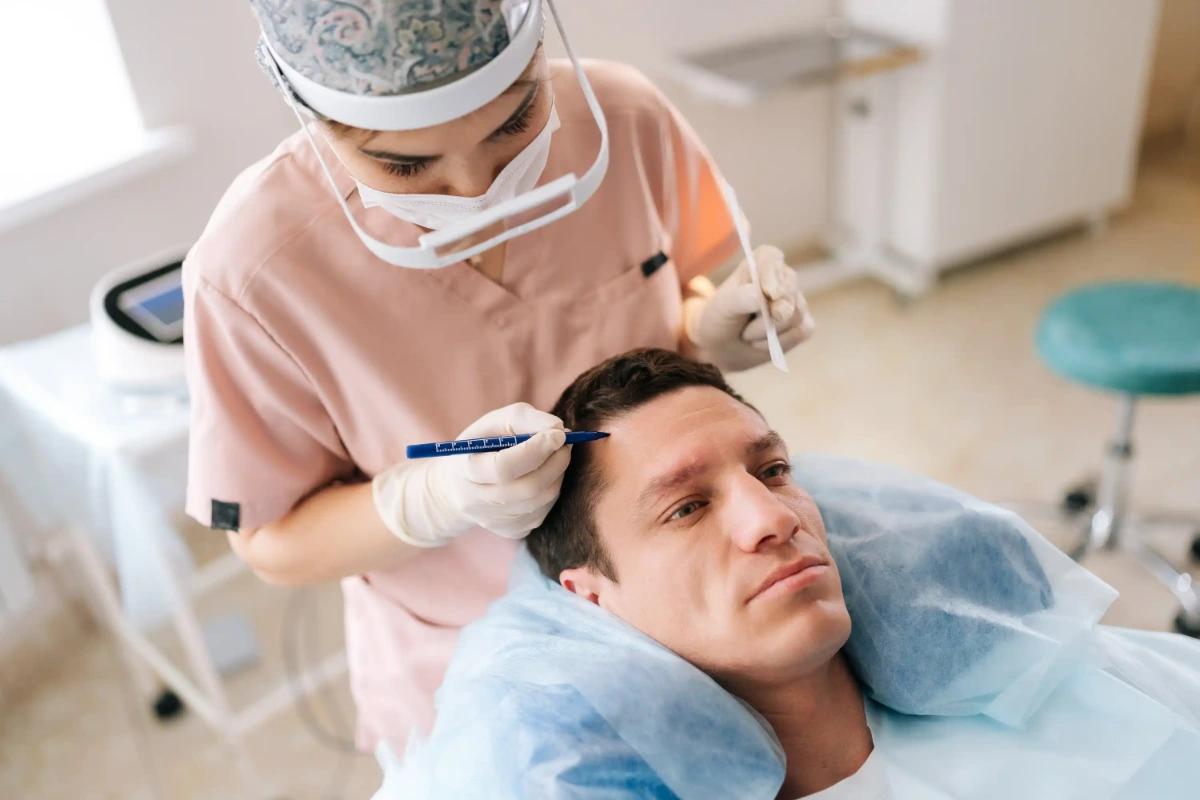
The hairline frames the face, and when it shifts back, the proportional relationship between the forehead and surrounding features changes in ways that consistently read as aging. Most patients notice the change in photographs before they see it in the mirror, indicating the recession has already begun and is not yet a daily concern. Wisconsin’s long, physically demanding winters place additional stress on the nutritional and hormonal systems that support hairline follicle health, compounding a genetically driven process.
At VIVE Med Spa, we provide receding hairline treatment in Verona, WI, for patients throughout Fitchburg, Madison, Middleton, Oregon, Belleville, and New Glarus. Like pattern hair loss, hairline recession responds best to treatment initiated while the follicles along the hairline are still active.
A receding hairline is most commonly driven by androgenetic alopecia. The frontal and temporal regions contain follicles with high DHT sensitivity, making them among the first areas to show thinning and recession.
Contributing factors include:
The same process driving broader pattern hair loss, concentrated at the hairline in genetically susceptible patients.
Repeated tension from tight hairstyles causes mechanical follicular damage that can produce permanent recession if sustained.
Iron, ferritin, and protein deficiencies accelerate hairline loss in susceptible patients.
Testosterone changes in men and estrogen loss in women both affect the protective hormonal environment that hairline follicles depend on.
Early evaluation produces better clinical outcomes. Seek professional guidance if:
PRP/PRF Hair Rejuvenation
Concentrated growth factor injections are placed along the hairline and affected temporal zones, activating dormant follicles and improving the local vascular environment. The standard initial series is 3 sessions spaced 4 to 6 weeks apart, followed by maintenance every 4 to 6 months.
Minoxidil and Finasteride
Topical minoxidil extends the active growth phase of the hair cycle. Oral finasteride reduces systemic DHT levels, addressing the hormonal driver of recession at its source. Most effective in combination with PRP/PRF.
Follicles that have recently become dormant have the greatest potential for reactivation through growth factor therapy. Follicles inactive for several years may not fully respond. A consultation will assess the current state of the hairline and give a realistic prognosis.
Most patients notice stabilization of the ongoing recession within 2 to 3 months. Visible regrowth at the hairline typically becomes apparent over 4 to 6 months following the initial treatment series.
Finasteride carries a risk of sexual side effects in some male patients, including reduced libido and erectile changes. These are typically reversible upon stopping the medication. Your provider will discuss the risk profile in detail before prescribing.
Yes. PRP/PRF is appropriate for female hairline recession. Finasteride use in women requires careful consideration of hormonal status and is not appropriate during pregnancy or in women of childbearing potential without contraception.
At VIVE Med Spa in Verona, WI, receding hairline treatment is tailored to your specific recession pattern and degree of loss. Patients from Fitchburg, Madison, Middleton, and surrounding communities trust us for clinical guidance that prioritizes realistic outcomes.
Book a consultation to explore your goals, ask questions, or learn which treatments are the best fit for you. If you are ready to book or simply want to learn more about what we offer, our team is happy to walk you through your options. We are here to help.
Book an appointment
Put your details below and we’ll connect with you