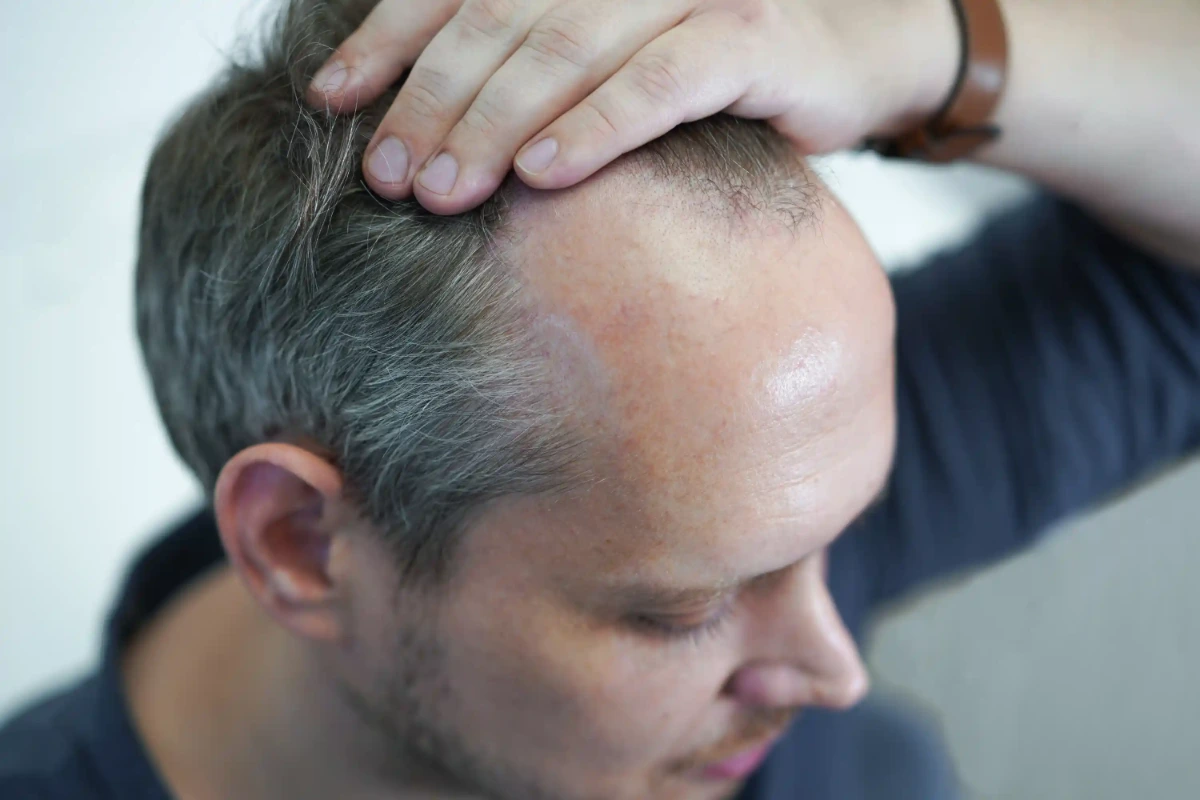
Alopecia areata is a different category of hair loss from pattern thinning or postpartum shedding. It is an autoimmune condition in which the immune system mistakenly attacks the hair follicles, producing the circular or patchy bald spots that are its defining characteristic. In Wisconsin, where cold and flu season puts sustained pressure on the immune system throughout the winter months, patients with a predisposition to autoimmune activity often see flares concentrated in the fall and early winter.
At VIVE Med Spa, we provide alopecia areata treatment in Verona, WI, for patients throughout Fitchburg, Madison, Middleton, Oregon, Belleville, and New Glarus. Treatment focuses on supporting follicular reactivation and the scalp environment in areas where the immune-mediated attack has disrupted the hair growth cycle.
Alopecia areata is an autoimmune condition that causes well-defined, typically round patches of hair loss on the scalp or other parts of the body. Unlike androgenetic alopecia, which destroys the follicle over time, alopecia areata does not permanently damage the follicle. The follicle enters a prolonged dormancy while the immune attack is active, but retains the structural capacity to regrow hair when the immune activity subsides.
The condition ranges from patchy loss confined to a few small areas (alopecia areata) to complete scalp hair loss (alopecia totalis) to complete body hair loss (alopecia universalis). Most patients present with the patchy form, which has the most favorable response to treatment.
The exact trigger is not fully understood yet, but contributing factors include:
Alopecia areata runs in families and is associated with other autoimmune conditions, such as thyroid disease, vitiligo, and atopic dermatitis.
An overactive immune response targets the hair follicle matrix, disrupting the normal growth cycle and pushing follicles into extended dormancy.
Significant stress events are commonly cited by patients as preceding their first episode or a new flare of existing alopecia areata.
Some patients report that their flares correlate with seasonal transitions, and the physiological stress of Wisconsin’s extended winters may be a contributing environmental factor in susceptible individuals.
Professional treatment is appropriate if:
PRP/PRF Hair Rejuvenation
Growth factor injections are placed directly into the affected scalp zones, supporting follicular reactivation by improving the local vascular environment and delivering regenerative signals to dormant follicles. PRP/PRF does not suppress the immune response directly but creates conditions favorable to follicular recovery. Most patients require a series of 3 sessions spaced 4 to 6 weeks apart.
Microneedling + PRP
Combining scalp microneedling with PRP delivers growth factors more intensively by using the microchannels created during needling to maximize PRP absorption in the affected areas. This compounded approach may produce stronger follicular stimulation than PRP injection alone in patients with persistent or recurrent patches.
PRP/PRF does not address the underlying autoimmune mechanism. It supports follicular recovery in dormant patches and improves the scalp environment for regrowth. Some patients achieve meaningful regrowth with treatment; others require additional medical management for the immune component.
Initial regrowth in treated patches typically becomes visible within 3 to 4 months of beginning the treatment series. The degree of response varies with the duration of the patch, the extent of alopecia, and the level of immune activity at the time of treatment.
Alopecia areata benefits from a coordinated care approach. A dermatologist or alopecia areata specialist can assess the immune component and, if indicated, prescribe appropriate medical treatment. VIVE Med Spa provides the growth factor stimulation and scalp support component alongside medical management.
In many cases, no. The patchy form of alopecia areata has a significant spontaneous remission rate, particularly for patients with limited patchy involvement. Clinical treatment can support and accelerate that recovery.
At VIVE Med Spa in Verona, WI, alopecia areata treatment focuses on creating the conditions for follicular reactivation in affected patches. Patients from Fitchburg, Madison, Middleton, and across the surrounding communities come to us for a clinical approach to a condition that is notoriously unpredictable but meaningfully responsive to the right support.
Book a consultation to explore your goals, ask questions, or learn which treatments are the best fit for you. If you are ready to book or simply want to learn more about what we offer, our team is happy to walk you through your options. We are here to help.
Book an appointment
Put your details below and we’ll connect with you