Atopic dermatitis is not just a rash that comes and goes. For patients managing it long term, it is a cycle of flares, temporary improvement, and unpredictable triggers that affect sleep, concentration, and daily comfort. In Wisconsin, the environmental conditions that drive flares are built into the calendar. Cold, dry air from late fall through early spring strips moisture from the skin barrier, and the seasonal pollen surges in Dane County that mark spring and fall are consistent flare triggers for many patients.
At VIVE Med Spa, we offer supportive atopic dermatitis treatment in Verona, WI, for patients throughout Fitchburg, Madison, Middleton, Oregon, Belleville, and New Glarus. We provide adjunctive in-clinic care designed to calm inflammation and support the skin barrier alongside your existing medical management.
This chronic inflammatory skin condition is characterized by dry, itchy, and inflamed skin. It belongs to the atopic triad alongside asthma and allergic rhinitis. It involves a dysfunction in the skin’s barrier function that allows irritants and allergens to penetrate more easily, triggering an immune response.
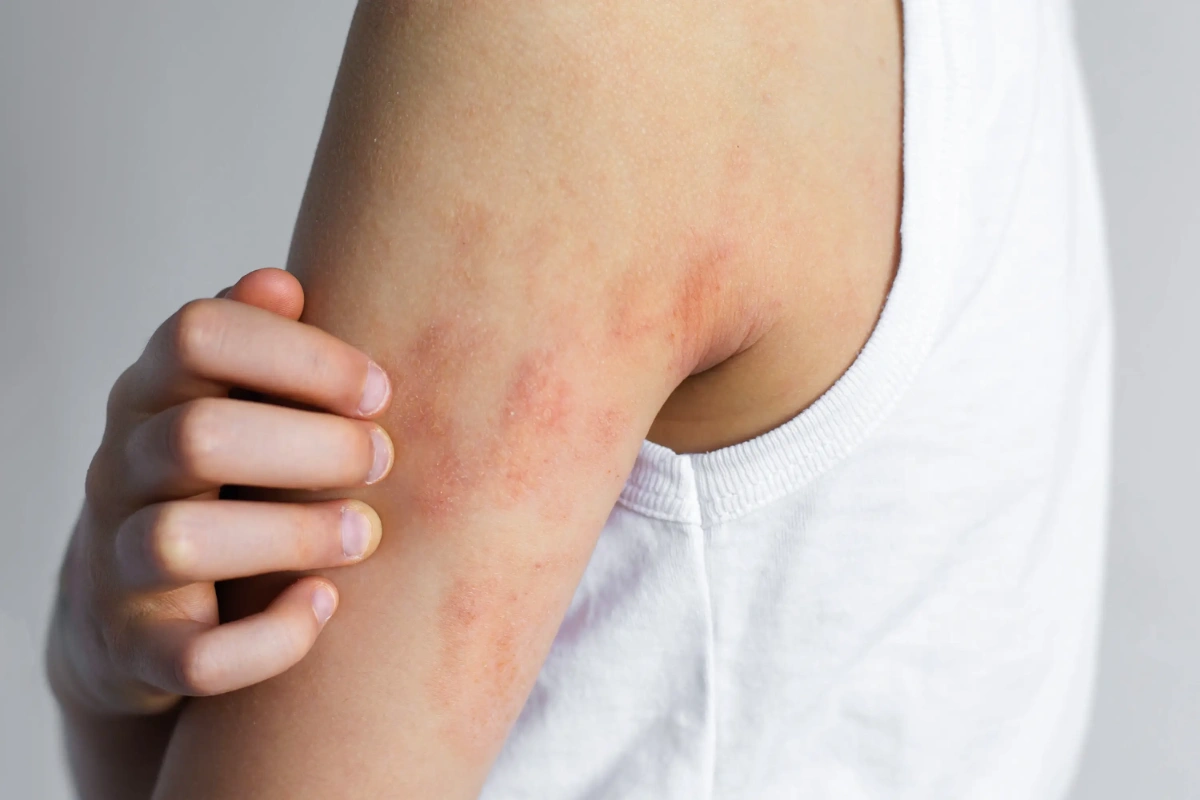
It typically presents as red, scaly patches, most commonly on the face, neck, inner elbows, and the backs of the knees. Severity ranges from mild, intermittent dryness to severe, widespread inflammation that significantly affects quality of life. It is most prevalent in children but affects adults as well, and it is a chronic condition that requires ongoing management rather than a single course of treatment.
Flare patterns vary by individual, but common triggers include:
Wisconsin winters create the environmental conditions most reliably associated with barrier breakdown and flare onset.
Warm weather and physical activity increase sweating, which can irritate compromised skin.
Pollen, pet dander, dust mites, and mold are common environmental triggers.
Fragrances, preservatives, and surfactants in cleansers and moisturizers can disrupt the already-weakened skin barrier.
Emotional and physiological stress activates inflammatory pathways that worsen existing skin inflammation.
Wool, synthetic materials, and certain metals can provoke localized flares in sensitive patients.
This medical condition requires primary management by a physician or dermatologist. You should consider in-clinic skin support if:
VIVE Med Spa does not replace your dermatologist or prescribing physician. We provide supportive in-clinic care, specifically LED light therapy, that works alongside your existing medical management to reduce surface inflammation during flares.
LED Light Therapy (Add-On)
Red light wavelengths reduce surface inflammation and support skin barrier repair without heat, chemicals, or any skin disruption. LED therapy is a gentle, non-invasive add-on appropriate for reactive and sensitized skin. It is not a standalone treatment, but it can meaningfully reduce redness and discomfort during a flare when added to a compatible facial service.
We provide adjunctive support through LED light therapy, which helps calm surface inflammation. This skin condition requires primary medical management by a dermatologist, atopic dermatitis specialist, or physician, and our services are designed to complement that care.
Red light LED therapy is generally well tolerated on inflamed skin and does not generate heat. Your provider will assess your skin’s current condition before adding it to your session to confirm it is appropriate.
Patients with active skin conditions should avoid chemical peels, microneedling, dermaplaning, and aggressive exfoliation during flares. These treatments can further compromise an already disrupted skin barrier. Your provider will help you identify which services are safe based on your current skin status.
LED therapy can be incorporated into qualifying facial sessions as frequently as monthly or more often during periods of active flare. Your provider will recommend a cadence based on how your skin is responding.
Consistent use of fragrance-free, barrier-supportive moisturizers, avoiding known triggers, and following your prescribing physician’s protocol are the most effective between-appointment strategies. Your provider can offer guidance on home care during your consultation.
At VIVE Med Spa in Verona, WI, we understand that this form of dermatitis is a chronic condition that needs more than a single clinic visit to manage. Our role is to offer gentle, evidence-informed adjunctive support that helps reduce the surface impact of flares while you work with your medical provider on long-term management.
Schedule a consultation today to discuss how in-clinic support can fit into your existing care plan.
Book a consultation to explore your goals, ask questions, or learn which treatments are the best fit for you. If you are ready to book or simply want to learn more about what we offer, our team is happy to walk you through your options. We are here to help.
Book an appointment
Put your details below and we’ll connect with you