
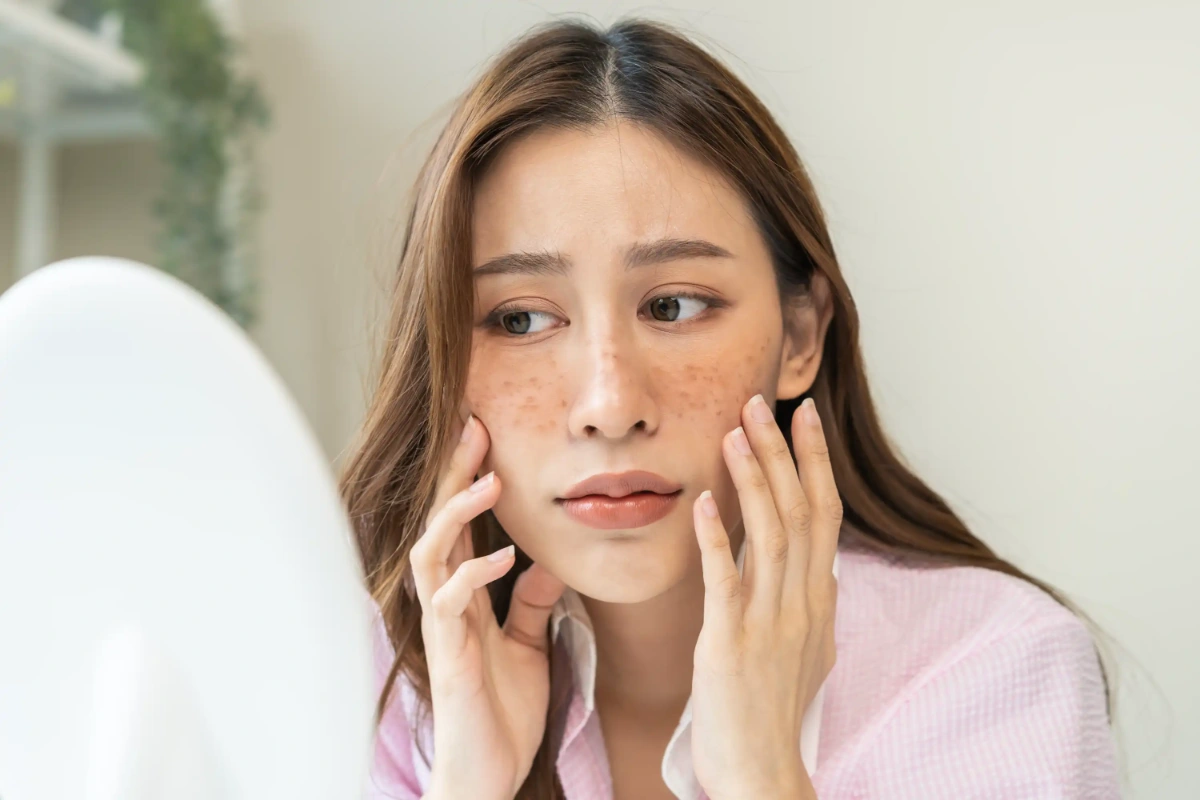
Few skin concerns are as frustrating to manage as persistent discoloration. The patches fade with treatment, then return with the next season of sun exposure or the next hormonal shift. For patients in Verona and the greater Madison area, the challenge is compounded by the environment. Long summers with significant UV exposure accelerate melanin production, and the contrast of Wisconsin winters, with reduced daylight and humidity, tends to make existing discoloration look more pronounced against dull, dry skin.
At VIVE Med Spa, we provide color correction for melasma, dark spots, and discoloration treatment in Verona, WI, for patients throughout Fitchburg, Madison, Middleton, Oregon, Belleville, and New Glarus. Treatment targets melanin pathways and skin renewal processes to address your specific discoloration pattern.
Skin discoloration is a broad category that includes any uneven distribution of melanin that creates visible patches, spots, or tonal irregularities on the skin. The most common presentations include melasma, post-inflammatory hyperpigmentation, sun damage, and age-related dark spots.
Melasma appears as symmetrical brown or gray-brown patches, most commonly on the cheeks, forehead, and upper lip. Hormonal factors and UV exposure heavily influence it. Post-inflammatory hyperpigmentation occurs after skin injury or inflammation, such as acne or eczema. Sun damage and age spots develop from cumulative UV exposure over time and tend to appear on the face, chest, and hands.
Multiple factors drive melanin overproduction:
Sun exposure stimulates melanocytes to produce pigment, both acutely after sun exposure and cumulatively over years of outdoor activity.
Estrogen and progesterone changes associated with pregnancy, oral contraceptives, and perimenopause trigger melasma in susceptible patients.
Skin that has experienced inflammation from acne, eczema, or injury produces excess melanin during healing.
Heat alone can stimulate pigment production, which is why Dane County’s warm summer months are consistently associated with new discoloration or worsening discoloration.
Patients with deeper skin tones have more active melanocytes and are more prone to visible pigmentation changes in response to any of the above triggers.
It is worth consulting a professional if:
Treating melasma post-inflammatory hyperpigmentation effectively requires targeting the melanin production cycle, accelerating cell turnover, and maintaining consistent sun protection. At VIVE Med Spa, treatment is tailored to the type and depth of discoloration.
.
LinderHealth Chemical Peels
Chemical exfoliation accelerates the shedding of pigmented surface cells and disrupts melanin transfer in the epidermis. The Hero peel addresses broad discoloration and uneven tone. At the same time, the Polite peel offers a gentler option for patients with sensitive skin or melasma who may be sensitive to more aggressive approaches.
HydraFacial
Combines deep cleansing, exfoliation, and targeted brightening serum infusion to improve tone and clarity. An effective maintenance option between more intensive treatments, and well-suited to patients whose discoloration is primarily surface-level.
Microneedling
Collagen induction therapy promotes deeper skin renewal and reduces pigmentation driven by post-inflammatory or cumulative UV damage. Particularly effective for patients whose discoloration sits within the deeper layers of the epidermis, where surface exfoliation alone cannot reach.
Melasma is a chronic condition that can be managed and significantly improved, but not permanently cured. Ongoing sun protection and maintenance treatments are necessary to prevent recurrence, particularly through Wisconsin’s summer months.
Most patients see visible improvement after 2 to 3 sessions. A full series and consistent home care support the best long-term outcome. Recurrence is common without ongoing sun protection.
Yes, with appropriate product selection. Peel strength and microneedling depth are adjusted for melanin-rich skin to minimize the risk of triggering additional post-inflammatory hyperpigmentation. Your provider will customize the approach during consultation.
Without consistent SPF and trigger management, yes. UV exposure and hormonal fluctuations continue to stimulate melanin production. In-clinic treatment is most effective when combined with a disciplined daily protection routine.
At VIVE Med Spa in Verona, WI, we build treatment plans around the type of pigmentation you are dealing with and the lifestyle factors that are sustaining it. Patients from Fitchburg, Madison, Middleton, and across the surrounding area trust us to address both.
Schedule your consultation today and get a plan that accounts for your skin and your environment.
Book a consultation to explore your goals, ask questions, or learn which treatments are the best fit for you. If you are ready to book or simply want to learn more about what we offer, our team is happy to walk you through your options. We are here to help.
Book an appointment
Put your details below and we’ll connect with you